
Every farmer wants to maximize efficiency…but what does that mean?

“What I’ve found is that ‘efficiency’ means something different to everyone,” said Ryan Harbison, AgroLiquid Agronomist. “I like to find out what’s the most important thing to a grower – time? Fertility? Together we can figure out what’s the most beneficial to your acres and see how to have the best growing season.”

Let’s look at different ways growers can get the most out of their crops.

Compatibility

If you have to make three separate passes to apply nutrition, fungicide, and herbicide, it takes time, fuel, and risks soil compaction.

AgroLiquid products are engineered for compatibility. Our formulations are designed to work well with others in the tank, which means fewer passes. When you can tank-mix your fertility with your crop protection products without worrying about compatibility, you’re maximizing a great resource – time.

Low use rates, high impact

More isn’t always better. Because of our Nutriq technology our nutrients are protected from tie-up in the soil, this allows us to achieve better results with lower use rates compared to conventional fertilizers. Lower volume means less storage space and less time spent filling the planter or sprayer. Plus, utilizing Nutriq technology allows for a better delivery process into the plants.

Plant tissue safety

You can have the best fertilizer, but if it damages the crop, you’ve traded one problem for another. Efficiency is lost when the plant has to spend energy recovering from tissue burn instead of focusing on yield. Our formulations are designed to help keep plants safe.

Timing

“There are so many things that are out of your control when you’re farming,” Harbison said. “It comes down to what we can control on our own acres. You can control what you plant, when you plant – depending on the weather – and how you treat your plants.” This is true for every crop, whether it’s corn and soybeans or tomatoes and pumpkins.

By using products that stay available in the root zone longer and are safe for foliar application, we give growers more flexibility. This helps make sure that the fertilizer you invested in is actually there when the plant is ready to use it.

Analysis

“As a company we focus on solutions that provide available plant nutrition,” Harbison said. “But we need to know what the base is before we can give a good recommendation. That’s why we start with soil testing every time.” As a result, growers bring the tests to AgroLiquid representatives to get their expertise.

When you control the variables you can – like timing, placement, and nutrients – you protect your investment against the variables you can’t. Whether your priority is saving time or improving uptake in the field, AgroLiquid is here to help you define what efficiency looks like for your particular farm and turn it into a reality.

Efficiency basics

With AgroLiquid, you can:

  • Save time and fuel by combining nutrition, fungicides, and herbicides in a single pass.
  • Use our Nutriq technology to achieve higher performance at lower volumes.
  • Depend on our formulations that are designed to be gentle on plants.
  • Trust that nutrients will stay available in the root zone longer, unlike conventional fertilizers that can tie up in the soil.
  • Start with a soil analysis, and we’ll help build a fertility plan that works for your acres.

Contact your AgroLiquid representative >

~

Ryan Harbison is an AgroLiquid agronomist in the Midwest & Western Canadian regions.

For growers living in regions with high pH or alkaline soils, dealing with yellowing leaves and stunted crops is difficult. This occurrence, known as Iron Deficiency Chlorosis (IDC), can negatively affect a season’s hard work. While iron may be present in the soil, alkaline conditions chemically lock it up, making it insoluble and inaccessible to the plant.

To help fix this issue between soil potential and plant uptake, AgroLiquid offers microLink Iron HPH. This specialized nutrient solution is engineered specifically to work where traditional iron supplements fail, so crops remain productive even in challenging environments.

IDC
The impact of iron deficiency is most visible in soybeans. IDC limits yield in soybean fields in the northern and western Corn Belt, including western Minnesota, the Dakotas, Nebraska, Iowa and other states. In fact, according to a 2019 U.S. report, soybean IDC resulted in annual yield losses totaling $260 million.

This loss occurs because iron is a component of chlorophyll synthesis. Without it, the plant can’t perform photosynthesis, leading to fewer bushels at harvest. While many growers attempt to compensate with generic iron salts, these often become insoluble immediately upon contact with high-carbonate soils.

Nutriq technology
What sets microLink Iron HPH apart from standard fertilizers is AgroLiquid’s proprietary Nutriq technology. In high pH environments, iron typically reacts with oxygen or carbonates to form solids that roots can’t absorb. Nutriq technology protects the iron molecule, keeping it in a stable and plant-available form no matter the soil chemistry.

This technology also simplifies application. A complication in micronutrient application is tank mix incompatibility, which is the tendency for products to clump or settle when they’re mixed.

Since microLink Iron HPH is designed for high compatibility, it can be integrated with:
• Macronutrients: Nitrogen, phosphorus, and potassium (NPK) programs
• Other micronutrients: Tailored blends for specific soil needs
• Crop protection: Co-application with herbicides or fungicides to reduce the number of passes through the field

Benefits for the high plains and beyond
Using microLink Iron HPH offers three main advantages for growers:

1. Iron uptake: By delivering iron that remains mobile in the soil, the product directly fights IDC, fueling the production of chlorophyll and improving plant health.

2. Efficiency: Because the formulation is stable, growers can mix it with a wide range of inputs. This flexibility saves valuable time and reduces fuel costs by minimizing trips across the field.

3. Flexible application: Whether applied in-furrow or as a foliar treatment, the product adapts to the grower’s existing equipment and schedule.

(While microLink Iron HPH is highly compatible, always perform a jar test and read the label instructions before mixing.)

Soil health
Managing IDC is a complex challenge influenced by soil moisture, carbonate levels, and crop variety. Successful management requires a strategy: selecting IDC-tolerant varieties, managing soil moisture, and using specialized iron delivery systems like microLink Iron HPH.

Why AgroLiquid
As growers, we can’t afford to let potential revenue disappear into alkaline soils. AgroLiquid’s microLink Iron HPH provides a user-friendly answer to the iron accessibility issue. By combining Nutriq technology with an understanding of plant physiology, high pH soils no longer have to mean low yield potential. Learn more – contact AgroLiquid today.

Download microlink Iron HPH white paper >


Due to fluctuating input costs, weather, and the global market, agriculture is an ever-changing industry. But – you don’t have to go it alone. By using AgroLiquid resources, farmers can move toward a precision-based model that prioritizes healthy crops and budgets.

Our goal is to help provide the stability you need to get and stay profitable. We provide a comprehensive support system designed to help you weather economic problems and environmental issues.

Our team stands ready to assist you through:

  • Culture: Our team is refining their agronomic skills and product knowledge to make sure we can provide cutting-edge solutions even during volatile times.
  • Planning: Our goal is to help you survive today plus produce consistent profits for generations to come.
  • Research: We use extensive data from our research to make sure recommendations are backed by rigorous testing.
  • Efficiency: Through our unique technology, we help you apply exactly what is needed.

Science and strategy

In times of economic pressure, the instinct is often to cut costs. However, this can cause future problems. This is where the AgroLiquid team can help, since our retail partners and agronomists are equipped with the latest data to help you make decisions that protect your yields.

We conduct research on multiple crops in a variety of regions to make sure that when we make a recommendation, it’s backed by real-world performance. We focus on the specific nutritional gaps that are holding your yield back, and we always make sure you aren’t over-applying nutrients that the plants can’t use.

With good nutrient delivery and soil biology, we help you protect your investment against the variables we can’t control, like weather and the commodities market. When you lean on our experts, you get a tailored plan. We look at your soil tests, your yield goals, and your equipment capabilities to create a program that fits your specific operation. This level of customization is what allows us to help you perform better than ever.

Resources

Though we’re always available in person, we also offer a variety of resources on our site.

Back 2 Basics – AgroLiquid’s Back 2 Basics video series takes an in-depth look at the nutrients that make a difference in your crop’s success. In each short video, AgroLiquid agronomists walk you through the categories of a soil test, explaining the role each nutrient plays, how nutrients interact and key considerations for your fertility program.

Downloads – Whether you’re looking for crop-specific information or easy-to-read crop nutrition plans, we have documents free for downloading.

Blog – Read about the latest products, developments, and research on our blog. From events to new products to research results to educational videos and much more, we keep you well-informed. Get answers to crop- and nutrient-specific questions, plus helpful information about our products and research.

Research – At AgroLiquid, we study a variety of crops in detail to determine the best fertilizer combinations. Our research is carefully documented, including what fertilizers we use, when, on what crops, and how those crops grow. We also partner with people across the country to conduct research in other climates and soil types. This helps us develop the most efficient combinations for all types of crops.

Team – Our team of agronomists are experts in crop nutrition and agribusiness. Working with farmers and using our data, we study all types of crops to find the best and most cost-effective nutrition program. If you’re interested in improved yields for corn, soybeans, potatoes, sugar beets, tree nuts, and other crops, our agronomists are happy to help.

Building for the future

Our goal is to help you produce profits for years to come. We’ll work with you one season at a time, and we’re honored to be a part of your plan. To learn more about our nutrition plans and to find a local expert near you, we encourage you to contact us. We’d love to talk!

~

Stephanie Zelinko is a national agronomist for AgroLiquid.

AgroLiquid has a long history of research-based data on what inputs work best for a variety of crops. One of our latest research focuses is on crops in the southern part of the United States.

“The research we are doing now is building the rates and timing of certain products specifically for the South,” said agronomist Gabe Saxon. “Our 40 years of research have taken place in a variety of regions, but this data is strictly from the southern states.”

Let’s look at three recent research trials and what we found:

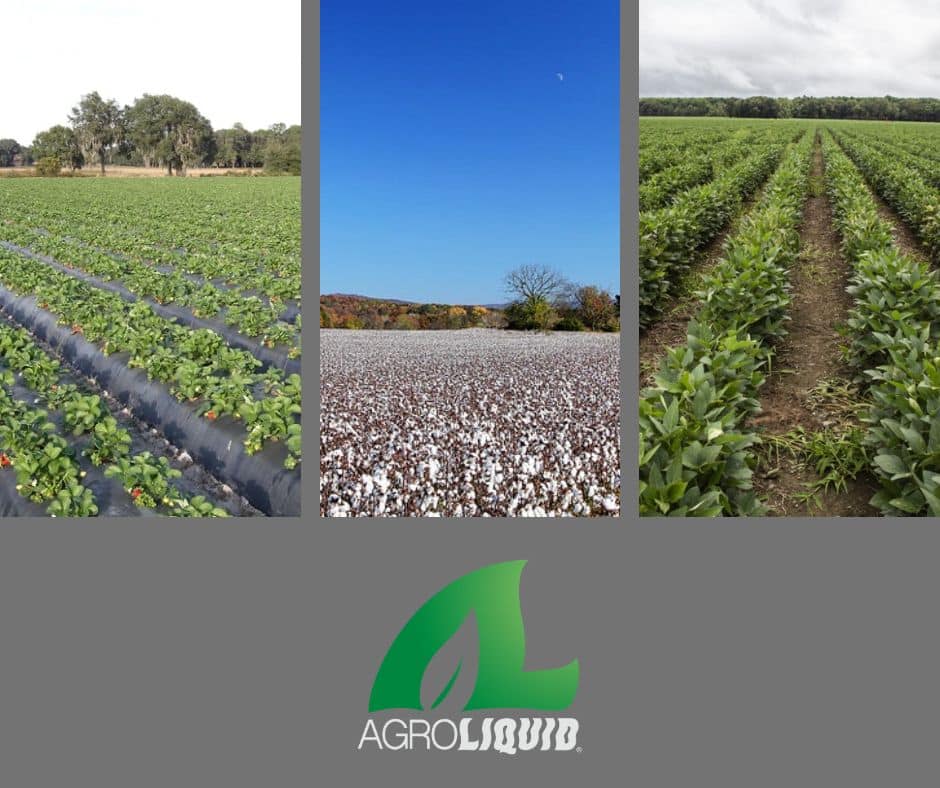
LiberateCA and Kapitalize on Strawberries: Dover, FL

Experiment overview

  • Objective: To evaluate the efficacy of AgroLiquid nutrient sprays for crop enhancement in Florida strawberries.
  • Variety: Brilliance.
  • Dates: Planted on October 18, 2024, and harvested on March 3, 2025.
  • Methodology: Plants were transplanted manually onto 4-foot wide beds and sprayed seven times with a backpack sprayer between November 12 and February 18.
  • Experimental design: Randomized complete block design with 30-foot plots, replicated four times.

Soil test data

The trial site reported the following soil characteristics:

  • pH: 6.3
  • CEC: 5.8
  • % Organic Matter: 0.62%

Yield performance

The primary metric measured was the number of marketable “Flats per Acre” (Flats/A).

Treatment Yield (Flats/A)
Kapitalize + LiberateCa 751
Untreated 694
Kapitalize 637
LiberateCa 617

Conclusions

  • Marketable yield: While total yields were uniform across all treatments, the combination of Kapitalize with LiberateCa produced the highest number of marketable berries.
  • Disease levels: Botrytis infection remained low throughout the trial, averaging only 3.9% of total yields across all treatments.
  • Harvesting: Plots were harvested ten times to record marketable berry counts, weights, and botrytis-infected berry counts.

~

Kapitalize Soybean Rates: Mantee, MS

Experiment Overview

  • Objective: To evaluate Kapitalize at various rates and growth stages in soybeans.
  • Variety: P49Z02E.
  • Dates: Planted on May 23, 2025, harvested on October 15, 2025.
  • Yield goal: 75 bu/ac.
  • Previous crop: Corn.

Soil test data

The soil at the Mantee, MS location showed the following properties:

  • pH: 6.7
  • CEC: 17
  • Organic matter (%OM): 2.1%
  • Phosphorus (Bray P1): 128 ppm
  • Potassium (K): 520 ppm

 Yield results (bu/ac): The trial compared different application rates (1, 2, or 3 gal/ac) and timings (V4-V7, R1-R2, or both). Kapitalize 1 gal/ac V4-V7 f/b R1-R2 resulted in the highest yield at harvest, producing 70.3 bu/ac.

Conclusions

  • Highest yield: The application of Kapitalize at 1 gal/ac during V4-V7 followed by an additional 1 gal/ac at R1-R2 produced the highest yield of 70.3 bu/ac.
  • Treatment vs. Untreated: Every treatment outperformed the untreated group, which had the lowest yield at 63.1 bu/ac.

~

Kalibrate and Kapitalize in Cotton: Mantee, MS

Experiment Overview

  • Objective: To evaluate Kalibrate applied in-furrow at planting and Kapitalize applied as a foliar spray at first bloom.
  • Variety: DP2328.
  • Dates: Planted on May 16; Harvested on November 30.
  • Yield goal: 2.5 Bales/Acre.
  • Yield calibration: Results were calibrated for a gin turnout of 40%.

Soil test data

The trial site in Mantee, MS, showed the following soil characteristics:

  • pH: 6.6
  • CEC: 13.3
  • Organic matter (%OM): 1.95%
  • Potassium (K): 435 ppm

Cotton yield results (bales/acre)

Treatment Description Yield (Bales/Acre)
Treatment 4 Treatment 2 + Kapitalize 1 Gal at 1st Bloom 3.94
Treatment 2 Kalibrate 2 Gal at Plant (In-furrow) 3.49
Treatment 1 Untreated Check 3.30
Treatment 3 Kalibrate 3 Gal at Plant (In-furrow) 2.84
Treatment 5 Treatment 3 + Kapitalize 1 Gal at 1st Bloom 2.65

Note: LSD P=.05 is 0.761.

Conclusions

  • Best performer: The highest yield (3.94 bales/acre) was achieved by applying 2 gallons of Kalibrate in-furrow followed by a foliar application of Kapitalize at first bloom.
  • Rate sensitivity: Applying 3 gallons of Kalibrate in-furrow actually resulted in lower yields than the untreated check, indicating that higher in-furrow rates may be detrimental.
  • Application success: Using 2 gallons of Kalibrate in-furrow showed a yield increase over the check.
  • Potassium management: The results suggest that even with sufficient soil potassium levels, correct application rates and timing of supplemental potassium can still increase yield.

~

Each of these research projects demonstrates that AgroLiquid’s foliar and in-furrow additives can improve yields. In the strawberry trial, the combination of Kapitalize and LiberateCa produced the highest marketable yield of 751 Flats/A, outperforming the untreated check by 57 Flats/A despite uniform total yields across all plots.

While all soybean treatments improved yield over the 63.1 bu/ac untreated baseline, the highest yield of 70.3 bu/ac was achieved with a lower rate of 1 gal/ac of Kapitalize applied at both the V4-V7 and R1-R2 stages.

Finally, the cotton trial in Mississippi emphasized the importance of precision in-furrow applications – applying 2 gallons of Kalibrate at planting followed by a Kapitalize foliar spray at first bloom maximized yield at 3.94 bales/acre.

Overall, the findings suggest that supplemental potassium and calcium applications are effective even in soils with sufficient base levels, provided that the timing aligns with reproductive stages.

“Most of our research focused on timing and rates, and what stood out was that we had really good timing in cotton starting at first bloom by adding potassium, boron, and calcium,” Saxon said. “We are also making really good progress with adding potassium to corn and soybeans from the middle to late stages, where we see our best results. Our focus is on how potassium and other small macro and micronutrients will give growers a real return on investment.”

See the research details >

~

Gabe Saxon is an AgroLiquid field agronomy manager in the Southeast region.

Insights From Crop Nutrition Week 2026

When margins are tight and input costs high, every input decision matters. You can’t afford to waste money on crop nutrition that doesn’t deliver – but you also can’t afford to shortchange your crop and watch yields suffer.

During Crop Nutrition Week 2026, agronomists delivered five days of strategies to help farmers make smarter decisions with the dollars they’re already spending. Here are the top five takeaways.

Takeaway #1: Don’t Skip Soil Testing

Soil testing is often one of the first things to get cut when budgets are tight. While you may save money up front, soil testing helps you identify where you might be overapplying or where you have hidden deficiencies. That information can help you redirect input dollars for better returns.

However, extracting value from a soil takes time – and that’s something many farmers don’t have.

“Growers are working with a lot of different priorities on their farming operation, and they don’t always have the capacity to interpret all of those numbers,” emphasized  Stephanie Zelinko, AgroLiquid national agronomist, during Crop Nutrition Week. “Working with a trusted advisor can help take the pressure off by giving you a clear picture of what that report means and how you can apply your fertility accordingly.”

Takeaway #2: There’s a Difference Between Price Per Pound and Cost Per Acre

Pricing crop nutrition inputs is no easy task. With prices listed in tons, gallons and pounds, comparing liquid, dry and specialty blends often leads growers to focus on price per unit. But according to Reid Abbott, AgroLiquid agronomist, that base fertilizer price – what he calls the “naked ton” – doesn’t tell the whole story.

“A lot of retailers will give a cost for products like 10-34-0, MAP, DAP or urea, and that cost per ton circulates the industry quite readily,” Abbott explained during Crop Nutrition Week. “But there are a lot of things that get added to those tons that don’t show up in that initial quote, whether it’s micronutrients, proprietary technology or additives to help stabilize the fertilizer. If you’re not accounting for everything that needs to be added to make them truly comparable, you could be missing important costs that affect your total per-acre investment.”

Takeaway #3: Nutrient Availability Beats Application Rates

“You can lead a horse to water, but you can’t make it drink. And if the water’s there but the horse can’t reach it, it doesn’t matter how much water you have,” explained Zelinko during Crop Nutrition Week.

The same principle applies to crop nutrition. You can apply all the fertilizer in the world, but if your crop can’t access it, you’re just throwing money into the field.

Zelinko says dry fertilizers may provide only 10 to 30% availability in year one, while liquid sources can deliver 70 to 90% availability.

Even highly available nutrients won’t help if roots can’t reach them. In-furrow and 2×2 placement position nutrients directly in the zone, especially important early in the season when root systems are small and plants are establishing. Products that protect nutrients from tying up with soil particles provide controlled release, keeping nutrients available over time.

Takeaway #4: Smart Nitrogen Management Breaks Expensive Habits

Nitrogen is typically the most expensive nutrient in your fertility program, yet it’s also the one farmers are most likely to over-apply. According to Abbott, there are two main reasons:

  1. Inherited practices: “Dad always applied 200 pounds, so I apply 200 pounds.”
  2. The insurance mentality: “More nitrogen means higher yields, so I’ll err on the high side.”

Even when you apply the right amount of nitrogen, you’re fighting against four major loss pathways: volatility, leaching, denitrification and immobilization. But, as Abbott explained during Crop Nutrition Week, it’s possible to reduce nitrogen application rates and improve utilization without sacrificing yield by adopting more efficient management practices:

  • Spoon-feeding throughout the season instead of making one large application
  • Injecting nitrogen to maximize how much gets into the soil rather than sitting on top
  • Applying products that keep nitrogen in forms less susceptible to loss
  • Adjusting rates and timing based on rainfall patterns and soil conditions

However, Abbott emphasizes that nitrogen management doesn’t happen in a vacuum.

“Nothing works in isolation. We all have a rounded nutritional balance in our diets, and plants do as well,” he explains. “There are nutrients like sulfur, manganese and iron that are involved with a lot of the same metabolic processes as nitrogen. If those are deficient or out of balance, then that means our nitrogen program isn’t going to be as efficient as well.”

Combining smart application practices with supporting nutrients creates a more efficient system that protects both your investment and your yield potential.

Takeaway #5: Micronutrients Are the “Hitch Pin” of Your Fertility Program

“You can have the best tractor and the best implement, but without the hitch pin connecting them, you’re not getting any work done,” shared Abbott on the final day of Crop Nutrition Week.

That’s exactly what micronutrients do in your fertility program. They’re not add-ons or extras – they’re critical connectors that make the whole system function. Micronutrients can deliver higher ROI than macronutrients in many situations. AgroLiquid trials found that adding micronutrients in-furrow at planting increased yield over N-P-K alone – proof that these “minor” nutrients deliver major results.

However, micronutrients don’t work in isolation. They interact with macronutrients and with each other in complex ways. Soil chemistry is also a key factor in their availability. High-pH soils can tie up micronutrients like zinc, manganese, iron and copper, even when soil test levels look adequate. By the time you see visual symptoms of micronutrient deficiency – yellowing, discoloring, stunted growth – yield loss is already occurring. Soil testing is critical to revealing issues and addressing them proactively.

Making Smarter Decisions

These five strategies aren’t isolated tips – they form an integrated system. From using soil tests to identify what your crop needs to comparing input prices and choosing products that maximize availability and efficiency, Crop Nutrition Week has the tools to help you make informed decisions based on data and science. Work with a trusted advisor to develop the right program for your operation.

Access the Complete Crop Nutrition Week Resources

Want to dive deeper into any of these topics? Visit CropNutritionWeek.com to register for access to all the video content and resources from this year’s event, plus archives from previous years. You’ll find detailed presentations, research data and practical guidance you can apply on your farm this season.

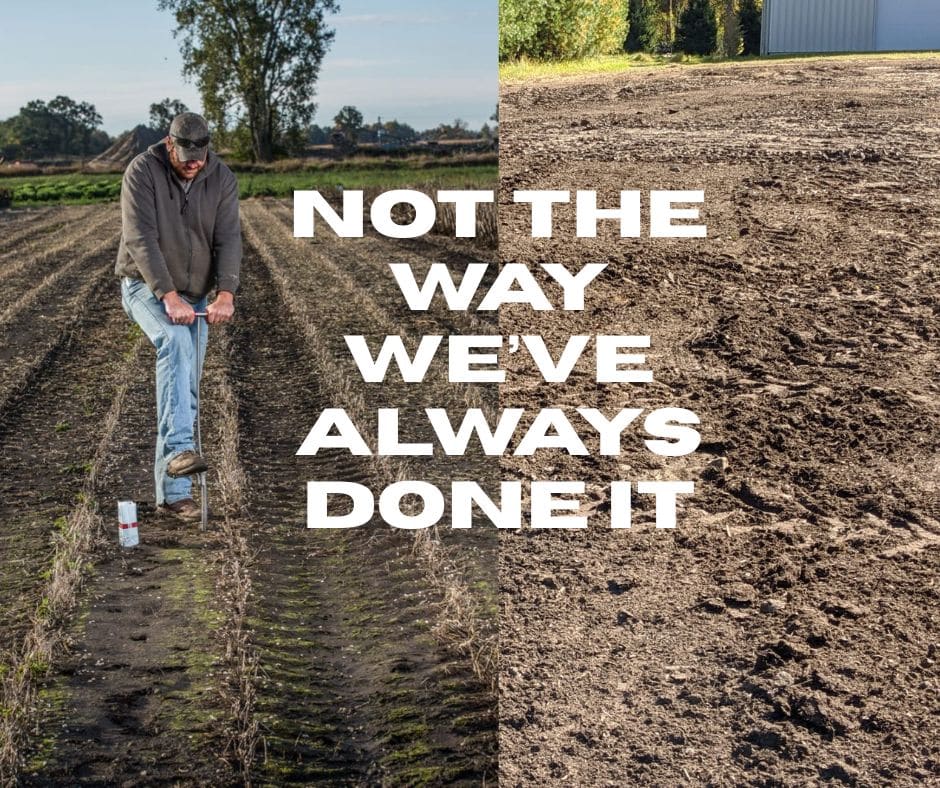
While seed genetics and equipment have advanced over time, many nutrient programs are still running on “the way we’ve always done it.” It’s time to stop guessing and start growing. By using the data behind soil testing, you can stop wasting input dollars and start feeding your crop what it needs.

It’s tempting to cut corners to save costs, but the one you can’t give up is soil testing.

Why soil testing
Soil testing tells you what you can’t see. With a soil test, you can find out:

  • The present soil condition, including imbalances, deficiencies, and excesses
  • How much nutrition is already available in the soil so that fertilizer applications can be tailored to those details
  • Changes over time, with a multi-year testing program
  • Soil characteristics, nutrition levels, and base saturation you can’t identify with your eyes

Of course, it costs money, but the costs currently average out to be less than $.50 per acre per year. Given the amount of information per penny, you can’t afford NOT to do soil testing.

Soil changes
If you’ve done soil testing in the past, is it still worth it to do it today?

Yes, due to a variety of factors. Over time, nutrient levels change due to loss through leaching or erosion, past fertilizer use, and when crops are removed. Plus, crops today take more nutrition than the yields of 30 years ago. Consider:

  • Nutrients like sulfur or micronutrients have become more prominent
  • Soluble nutrients like manganese and boron are difficult to build up in the soil
  • Sulfur from manufacturing and power generation facilities is not as available as it was before the Clean Air Act, so using the same fertilizer mix you have always applied may not provide the best production or return

What you learn
A soil test can help you develop a complete nutrient management program, including how to adjust nutrient imbalances and find out what fertilizer crops need. If you use products that can be mixed, this will also provide the best ROI due to fewer passes on the field, time, and fuel savings.

Real-life application
In a field experiment by MGS Farms near Innerkip, Ontario, the soil test report for the field showed low levels of phosphorus and potassium.

  • A common program in the area is an application of 5 gallons/acre of 6-24-6 liquid fertilizer that provides phosphorus and a small amount of potassium
  • That treatment was compared to 2.5 gallons/acre of Pro-Germinator to meet the phosphorus need, or 2.5 gallons per acre each of Pro-Germinator and Sure-K to meet the phosphorus and potassium need

Result: Addressing the phosphorus and potassium need as proven by the soil test provided higher yield and higher net return compared to either no phosphorus or phosphorus fertilizer alone.

This highlights that following local standard liquid fertilizer routines can result in yield gaps when soil-specific deficiencies are ignored. By transitioning from a generic 6-24-6 application to a targeted phosphorus and potassium program, the study shows how inputs directly correlate to higher net profitability.

That’s not all the soil test shows.

Soil test reports also show relationships between nutrients in the soil. If one nutrient is in excess, other nutrients may not be available to the crop, even if the values of those nutrients are high.

For example, let’s look at manganese and iron. If the manganese level is higher than the iron level, there is a risk that iron will be less available to the crop. In that case, supplemental iron nutrition is recommended.

In addition, Mulder’s Chart shows how excess levels of calcium can reduce the availability of several nutrients, including phosphorus, potassium and manganese.

Start today

You (and your soil test!) don’t have to figure out your crop nutrition alone. Whether you have a question about a soil test or want to build a full-season plan together, we’d love to hear from you. Reach out to your AgroLiquid rep to get started.

~

John Leif is a an AgroLiquid field agronomy manager in the Northeast region.

Farming is tied up in emotions. Growers love the land, they’re often running a multi-generational business, and they’re trying to do better every year. It’s impossible to completely separate feelings from decisions, but doing a little more analysis can help growers make more rational decisions based on data.

How to decide
There are a variety of factors that affect price, including rental agreements, land costs, and equipment costs. With annual crops, we have a great degree of latitude to change, but how does a grower decide between wheat, corn, soybeans, cotton, hemp, or other annuals?

Ask yourself:

• What crops can you realistically grow?
It can be tempting to grow crops on the fringes of the growing geography and assume all will turn out. One success story is usually over-generalized to become assumed success in all years.

• Where is the closest market?
If it’s too far, freight charges will erode the projected profits. If your buyer is far away, even in an export market, he will likely protect that distance and risk by lowering what he’ll pay.

• How big is the market?
Can it easily be overdone and create excess supply? Some crops can look attractive, but a swing of 100,000 acres is huge in a specialized crop. Consider these possibilities.

• Is the crop insurable in your area?
You need to protect your risk. Also, you have to consider the impact on capital. Don’t assume that your banker will agree with what you consider a good decision. If you don’t have capital to finish what you start, then the outcome will fall short of expectations.

Doing the math
You can establish an expected value by multiplying the potential profit by the probability of achieving it. This prevents outlier bias, where a single great year throws off your long-term financial planning. Also, this removes the emotion from the decision.

Crop Option Potential Profit Success Probability Expected Value
Cotton $150/acre 50% $75/acre
Corn $100/acre 80% $80/acre

Timing
Choosing a crop also matters based on when you get paid. For example, corn can provide cash immediately at harvest, while cotton payments can be delayed for an entire year due to the long ginning and marketing process. Even if a crop like wheat has a low market price, it can still be valuable because it provides cash during seasons when no other money is coming in.

Even if two crops earn the same profit, the one that pays you sooner is worth more because inflation reduces the buying power of money over time. It is usually better to choose a crop that pays a steady, reliable amount than a crop that rarely hits its big goals.

Of course, switching to a new crop is expensive because you often have to buy specialized equipment at a high price when demand is peaking. If the market drops and you try to sell later, you’ll potentially lose money since everyone else will be trying to sell theirs at the same time.

Overall, making a rational decision takes into account reliability and timing. You have to balance the speed of your cash flow and the costs of inflation against the price of new equipment. By prioritizing steady payouts and avoiding expensive risks, you protect your farm’s long-term financial health – and take emotion out of the equation.

Next steps
Before finalizing your planting plan for the next season, run your ideas through this checklist:

Run the numbers on averages: Don’t plan based on your best ever harvest – use a 5- or 10-year yield average to calculate a realistic expected value.

Check your cash flow: Estimate when you’ll see the first and last dollar from each crop.

Calculate the actual cost of equipment: If you need new machinery, determine if the profit from the new crop can pay down the debt within a realistic time period.

Audit your insurance and capital: Confirm that the crop is insurable and that your lender is on board with the risk level of the new plan.

Use a second set of eyes: Talk to a trusted peer or advisor and ask for an honest opinion.

The best way to protect your business is to consult people who want to see you succeed and will challenge your ideas. By doing your homework, you can help your farm stay financially (and emotionally!) stable for the long term.

Contact AgroLiquid >

~

Ryan Harbison is a field agronomy manager for AgroLiquid. He covers the Northern Midwest and Great Plains regions.

If you haven’t heard of Nutriq yet, we’d like to introduce you.

Though the name of the technology is new, the research isn’t. Nutriq is supported by 40 years of AgroLiquid research.

Nutriq technology activates available nutrients at the right time. This means avoiding unwanted issues by using consistent blends and a uniform manufacturing process. As a result, this maximizes your crop’s full potential through nutrient synergy.

Availability

AgroLiquid’s Nutriq technology helps nutrients remain free in the soil and remain available to crops when they need them. By preventing tie-up and controlling nutrient release, you help your crops  thrive.

  • Plant-based chelation helps molecules bond with nutrient cations
  • By using encapsulation, Nutriq protects the nutrient until release
  • Improves absorption in the root zone

“Nutriq technology protects the nutrients you apply from potential environmental losses such as tie up and leaching,” said AgroLiquid agronomist Stephanie Zelinko. “This helps make sure that more of what you apply is available for crop use.”

Synergy

That’s not all – next up is synergy. By using secondary and micronutrients to improve primary nutrient performance, Nutriq technology optimizes the plant’s internal nutritional processes for better uptake and efficiency.

  • More effective and efficient than using only primary nutrients
  • Helps reduce the risk of plant injury

“I have seen crop response from the synergistic effects Nutriq provides by offering a balanced nutrition with added trace nutrients to improve uptake,” Zelinko said.

Performance

What matters overall? How your crop performs.

Our technology uses high-quality materials and uniform formulations, so what you applies contains the same ingredients every time. We don’t add anything unnecessary, so the plants are protected. Plus, we save you time and money.

  • Compatible with other products
  • Safer for the plant
  • Less wear and tear on equipment

Backed by data

AgroLiquid firmly believes in research. We prove the effectiveness of Nutriq year after year with studies done at our North Central Research Station and in fields across the country. For instance:

  • 2020 naval orange trial: Research showed that AgroLiquid programs with Nutriq technology produced 10% more yield than grower standards, using only 42% of the actual gallons of nutrients. Read the report.
  • 2021–2023 silage summary: A three-year study in New York demonstrated that a complete Nutriq-powered program increased estimated milk production by 6,250 lbs per acre compared to basic programs. See the silage data.
  • 2024–2025 citrus and almond study: Recent trials in California revealed that Nutriq-driven programs generated $720 more profit per acre in mandarins due to better fruit sizing and Brix levels. View the 2025 citrus research.
  • Ongoing trials: We are currently running new studies designed to further improve nutrient efficiency.

Why Nutriq from AgroLiquid

Fewer inputs. Prevent tie up. Better yields. Save time and money.

  • Efficiency: Up to 80% more nutrient availability compared to traditional sources.
  • Compatibility: Tank-mix friendly and easy on your equipment.
  • Less is more: Less leaching means you get more production with less product.
  • ROI focus: It’s less about how much you apply and more about how much the plant uses.

Now that you’ve met Nutriq, you’d probably like to get to know it better. Whether you’re looking to cut down on waste, save your equipment from wear, or see what your crop’s full potential looks like, we’re here to help you make it happen. Reach out to your local AgroLiquid representative today, and we can walk through the data together to see how Nutriq can help on your farm.

~

Stephanie Zelinko is a national agronomist for AgroLiquid. She has over 20 years of experience with crop nutrition. She grew up on a crop farm, and she now farms with her husband and children.

Crop Nutrition Week 2026:

Your Complete Guide to Smarter Fertilizer Decisions

February 2-6, 2026 | Free Virtual Event

What if you could squeeze more value out of every fertilizer dollar you’re already spending? Maximizing ROI isn’t just about how much you apply – it’s about understanding the science behind nutrient efficiency from application to uptake.

The opportunity is bigger than you might think. When you understand how to optimize your crop nutrition inputs, you can improve your returns without necessarily increasing your costs. That’s the kind of edge that turns a good season into a great one.

That’s exactly why AgroLiquid is bringing Crop Nutrition Week back for its fourth year. Mark your calendar for February 2-6, 2026, because this free, week-long virtual event is designed to help you squeeze every dollar of value out of your fertility program. Registration is open now at CropNutritionWeek.com.

Why Nutrient Efficiency Matters More Than Ever in 2026

Even experienced growers who’ve been optimizing their operations for years can find new advantages when they dig into the science behind crop nutrition.

“There’s a hidden math behind every fertilizer application,” explained Reid Abbott, an AgroLiquid agronomist and Crop Nutrition Week expert.  “Understanding everything from the costs of what you’re buying to uptake rates and environmental impact on nutrient availability will help you make adjustments that can unlock significant profitability gains. We created Crop Nutrition Week to give growers the tools to make smarter decisions that maximize every input dollar.”

Consider this: if you can capture 80% of the nitrogen you apply instead of 60%, you’ve just increased your effective fertilizer investment by 33% without spending an extra dime. With the right strategies, you can flip that equation in your favor and turn your fertility program into a true competitive advantage.

Expert Insights You Can Apply This Season

The 2026 program takes a deeper dive into the economics of fertility management. You’ll discover how to:

  • Calculate true nutrient availability based on uptake, not just application rates
  • Identify critical timing windows to maximize uptake and minimize leaching and volatilization
  • Evaluate fertilizers by total program cost per acre, rather than price per pound
  • Use micronutrient synergies to unlock N-P-K utilization
  • Break free from nitrogen overapplication with data-backed solutions
  • Turn soil testing into data-driven profit decisions

Each session builds on the previous day’s content, creating a comprehensive framework for making smarter fertility decisions throughout the 2026 season.

How to Register for Crop Nutrition Week

Visit CropNutritionWeek.com to view the schedule and register for access to this year’s content and view the archives from previous years. Those who register before February 6, 2026, are also registered for a chance to win one of six prizes:

  • Grand prize: Vulcan® Outlaw™ ARC Welder/AC Generator
  • Daily prizes:
    • Husky 46″ Tool Storage
    • Tactacam Trail Camera 2-pack
    • Leatherman ARC Multi-tool
    • Vortex® Diamondback Binoculars
    • $250 Visa® Gift Card.

The Bottom Line

Understanding nutrient efficiency isn’t just good agronomy; it’s good business. Crop Nutrition Week 2026 gives you the tools to make every fertilizer dollar work harder, backed by research and proven in real-world conditions.

For corn growers, being profitable is a complex issue. High yields are the goal, but if input costs are too much to achieve them, there’s less of a return. Breaking through yield barriers isn’t about applying more fertilizer, but instead applying fertilizer that actually makes it into the plant.

At AgroLiquid, we’ve spent decades researching how to best optimize nutrient use. Based on our field research and product performance, here are four tips to help you push your corn yields higher while keeping a strong ROI.

  1. Protect phosphorus from tie-up

Phosphorus helps with early-season growth, since it assists with root development and energy transfer. However, conventional phosphorus fertilizers are inefficient. In many soil types, up to 75% of applied phosphorus can become tied up by calcium, iron, or aluminum shortly after application, making it unavailable to the crop.

The solution: To get higher yields, you need a phosphorus source that is available during the early growth stages. Pro-Germinator is designed to solve this problem. It features both orthophosphate (for immediate uptake) and polyphosphate (for sustained feeding), protected by our proprietary Nutriq Technology. This technology prevents phosphorus from binding with soil cations, keeping it plant-available longer.

Research has shown that Pro-Germinator can consistently outperform conventional fertilizers. In multi-year studies, corn treated with Pro-Germinator showed an average yield increase of 5 bushels per acre compared to conventional programs, largely due to the plant’s ability to access the nutrient when it needed it most.

  1. Address hidden potassium and sulfur needs

Potassium is needed for stalk strength and water regulation, while sulfur is important for nitrogen efficiency and grain fill. As corn yields increase, the removal rates of these nutrients get faster. Many growers find their standard dry fertilizer programs can’t keep up, or they face issues with seed injury when trying to apply enough in-furrow.

The Solution: Use a liquid potassium program that is safe for the seed and usable. Kalibrate is a great option for planting time. It provides a chloride-free source of potassium and sulfur that resists freezing, so it’s great for early spring applications in cooler climates. Because it’s protected by Nutriq Technology, the potassium doesn’t get tied up, so it’s available for the crop throughout the season.

For growers needing application flexibility later in the season, Sure-K offers an advantage. It can be foliar-applied or sidedressed without the risk of leaf burn associated with other potassium sources, so you can make sure you’re getting the right potassium levels during important growth stages.

  1. Don’t let micronutrients be the limiting factor

You can have the right nitrogen and phosphorus levels, but if you’re missing zinc, manganese, or boron, your yield potential is capped. In high-yield corn production, micronutrients are often the difference between a good crop and a record-breaking one.

The Solution: Integrate micronutrients directly into your starter program. Micro 500 is formulated to be compatible with Pro-Germinator and Sure-K, so you can address zinc, manganese, iron, copper, and boron deficiencies in a single pass. By placing these micronutrients in the root zone at planting, you help the corn reach its potential.

  1. Make the most of nitrogen

Nitrogen is often the largest fertilizer expense for corn, and the challenge is keeping it in the root zone and preventing loss.

The Solution: Use a nitrogen source designed for retention. High NRG-N is a multi-form nitrogen product that includes sulfur and trace minerals. Research trials have demonstrated that High NRG-N can often produce comparable or higher yields than 28% UAN while using lower application rates.

Why AgroLiquid

By using products like Pro-Germinator, Kalibrate, and Micro 500, you’re making sure your investment goes into your crop. Let’s have the best season ever! Contact your AgroLiquid representative today to get started.

~

John Leif is the field agronomy manager in the northeast region. John has been with AgroLiquid for 11 years, and he lives in St Johns, MI.